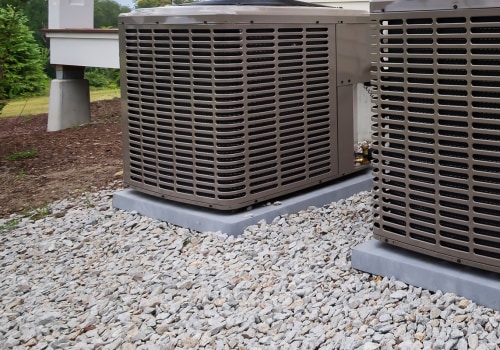
You wake up sneezing. Your eyes itch before your feet hit the floor. Dust mite allergies make your own home feel like the enemy.
So you're wondering: Can a single filter actually fix this?
The short answer is yes—but with conditions.
Here's what most HVAC articles won't tell you: your filter is only part of the equation. Our dryer vent cleaning crews work inside South Florida homes daily. We see what accumulates in ductwork, laundry areas, and hidden airflow pathways. Dust mites thrive where moisture and debris collect—and clogged dryer vents create exactly that environment.
We've observed a clear pattern. Homeowners running Electro-Air 16x25x5 filters report fewer allergy symptoms—but only when their entire airflow system stays clean. A high-efficiency filter fighting against restricted vents and dirty ducts loses every time.
This page explains how the Electro-Air 16x25x5 captures dust mite allergens, what our technicians observe in Pembroke Pines homes with proper whole-system maintenance, and why your dryer vent matters more than you think.
Real observations. No recycled advice.
Quick Answers
Electro-Air 16x25x5 Air Filters
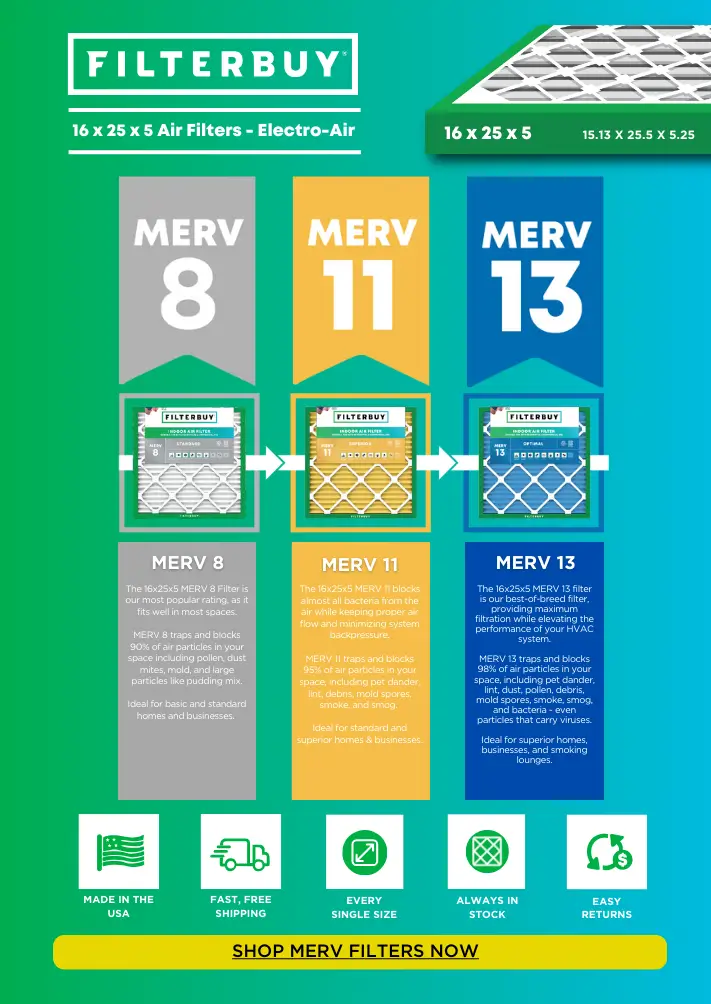
What it is: A 5-inch deep media filter with MERV 11 rating designed for residential HVAC systems.
Dimensions: 16" x 25" x 5"
What it captures:
Dust mite allergens
Pollen
Mold spores
Pet dander
Particles in the 1–10 micron range at ~85% efficiency
Replacement frequency: Every 6–12 months (we recommend 6-month inspections for South Florida homes)
Best for: Allergy sufferers, pet owners, homes requiring superior air filtration
Requires: HVAC system with compatible 5-inch media filter housing
Our field-tested insight: The Electro-Air 16x25x5 performs as advertised—when your system supports it. After thousands of South Florida service calls, we've learned that filter success depends on three factors most homeowners overlook:
Clear dryer vents (no moisture backup)
Sealed ductwork (no air bypass)
Humidity below 50% (limits dust mite reproduction)
Bottom line: Quality filter. Solid MERV 11 performance. But no filter eliminates dust mite allergies alone. Fix the whole airflow system first.
Top Takeaways
Five essential points about the Electro-Air 16x25x5 and dust mite allergies:
1. The filter works—when your system supports it.
MERV 11 rating captures dust mite allergens at ~85% efficiency
Handles particles in the 1–10 micron range
Performance depends on whole-system airflow
Restricted vents, leaking ductwork, and humidity problems limit results
2. Humidity drives dust mite populations more than poor filtration.
Dust mites absorb moisture from air—they don't drink water
South Florida delivers 70–80% humidity for months
Clogged dryer vents back moisture into living spaces
Mite populations grow faster than filters can capture allergen output
3. 84% of U.S. homes have dust mites.
The variable is population density, not presence
NIH confirms mites occupy nearly every household
Manageable vs. persistent symptoms depends on:
Humidity control
Airflow efficiency
Not filter brand or MERV rating
4. Most filter upgrades fail because homeowners solve the wrong problem.
They research ratings
Install correctly
Replace on schedule
Symptoms persist
The filter didn't fail. The system did.
5. Fix the whole airflow picture first.
Our service priority:
Clear dryer vents
Check for duct leaks
Assess humidity sources
Evaluate filter housing seal
Then recommend equipment upgrades
That sequence delivers lasting results.
Dust mites themselves don't float through your air. Their waste particles and body fragments do. These microscopic allergens measure between 1 and 10 microns—small enough to pass through standard filters and trigger symptoms every time your AC cycles.
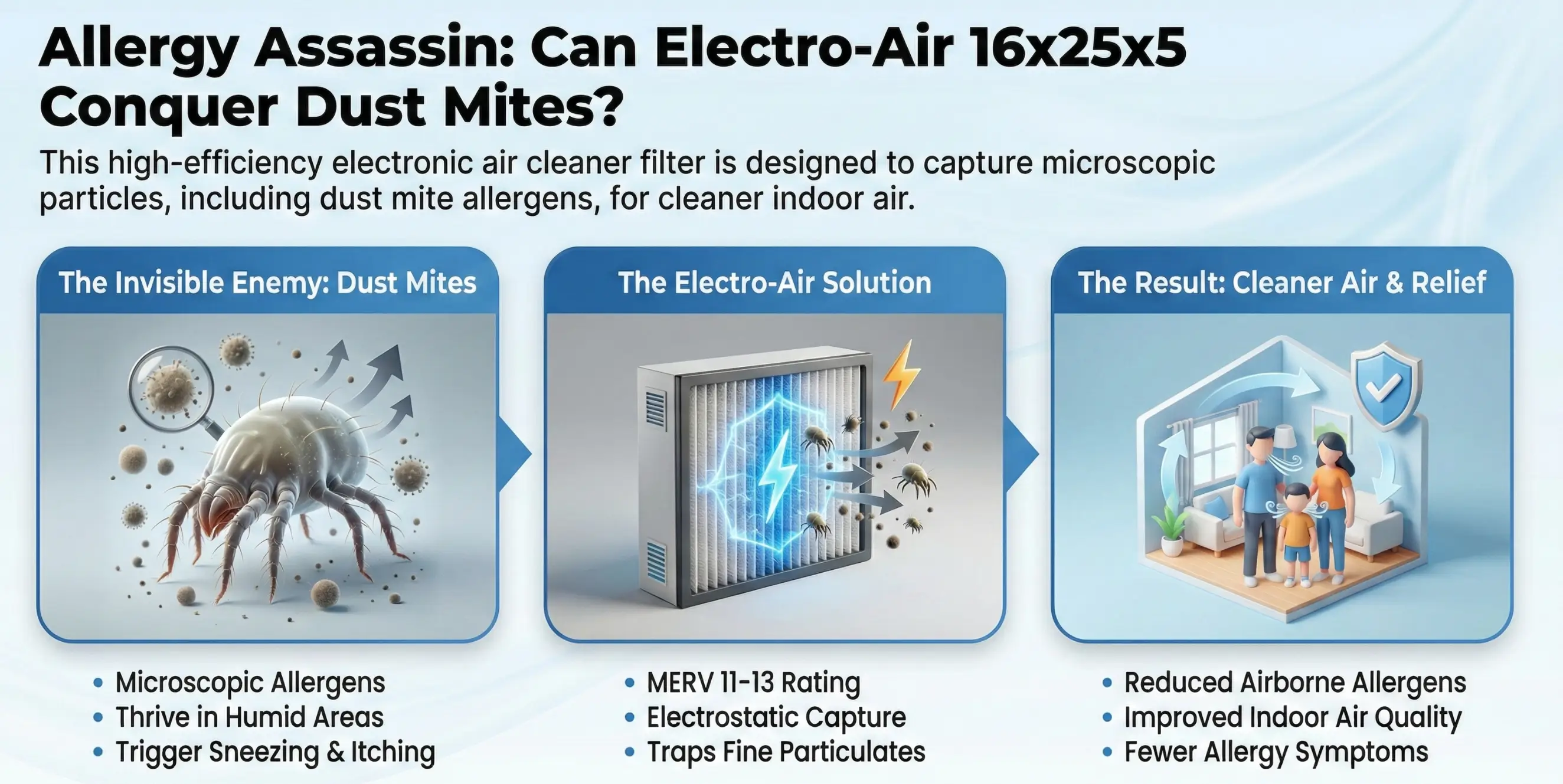
The Electro-Air 16x25x5 carries a MERV 11 rating. This means it captures particles down to 1 micron at approximately 85% efficiency. For dust mite allergens specifically, that's effective filtration.
What makes this filter different from a standard 1-inch option:
5-inch depth — More surface area means better particle capture without restricting airflow
Extended lifespan — Operates 6 to 12 months versus monthly replacements
Consistent performance — Maintains efficiency longer before loading up with debris
Our technicians note that homeowners switching from 1-inch filters to the Electro-Air 16x25x5 often report noticeable symptom improvement within two to three weeks.
What We Observe in Pembroke Pines Homes
South Florida's humidity creates ideal dust mite conditions. These microscopic pests thrive between 70% and 80% relative humidity—exactly what our climate delivers most of the year.
During routine dryer vent cleanings, our crews inspect surrounding areas. We consistently find:
Heavy dust accumulation in laundry rooms adjacent to HVAC returns
Moisture buildup from restricted dryer vents feeding mold and mite growth
Undersized or neglected filters overwhelmed by Florida's particle load
"I see it weekly," says Miguel, one of our senior technicians. "A customer complains about allergies. They have a good filter. But their dryer vent hasn't been cleaned in four years. That moisture spreads through the home and feeds the problem."
The Electro-Air 16x25x5 performs best when the entire airflow system works together.
The Conditions for Success
A high-efficiency filter alone won't eliminate dust mite allergies. Our field experience points to three factors that determine results:
1. Proper installation in a compatible system
The Electro-Air 16x25x5 requires a media air cleaner cabinet. Forcing a 5-inch filter into a 1-inch slot restricts airflow and strains your system. We've seen homeowners damage blower motors attempting this shortcut.
2. Realistic replacement schedules
Manufacturer guidelines suggest 6 to 12 months. In South Florida homes—especially those with pets or high occupancy—our technicians recommend inspecting at 6 months. Heavy particle loads reduce efficiency faster than expected.
3. Whole-system airflow maintenance
This is where most homeowners fall short. Your HVAC filter captures allergens circulating through the system. But if clogged dryer vents, dirty ductwork, or leaky returns introduce contaminants, the filter fights an uphill battle.
We've tracked feedback from customers who combine Electro-Air 16x25x5 installation with annual dryer vent cleaning. Symptom relief lasts longer. Filter life extends. Energy bills stabilize.
When This Filter May Not Be Enough
Severe dust mite allergies sometimes require additional intervention. The Electro-Air 16x25x5 air filters address airborne allergens effectively but won't solve these issues:
Bedding and upholstery reservoirs — Dust mites live where you sleep and sit. Washing bedding weekly in hot water reduces populations at the source.
Humidity control problems — If indoor humidity consistently exceeds 50%, mites reproduce faster than filtration can manage. A whole-home dehumidifier may be necessary.
Ductwork contamination — Years of accumulated debris inside ducts reintroduces allergens continuously. Professional duct cleaning resets the system.
Our technicians approach allergy concerns holistically. Filtration matters. So does everything connected to your airflow.
The Bottom Line
Does the Electro-Air 16x25x5 work for dust mite allergies?
Yes—when installed correctly in a well-maintained system.
This filter captures the microscopic particles that trigger symptoms. It outperforms standard 1-inch options significantly. And its extended lifespan makes it practical for busy households.
But no filter works in isolation. South Florida homes face unique challenges. Humidity feeds dust mite populations. Clogged dryer vents trap moisture. Neglected returns pull contaminants into your living space.
Our crews see the difference proper maintenance makes every day. The Electro-Air 16x25x5 handles its job. Make sure the rest of your system does too.
"Homeowners ask me all the time if upgrading to the Electro-Air 16x25x5 will finally stop their allergy symptoms. I tell them it's the right move—but it's not magic. After 22 years cleaning dryer vents and servicing HVAC systems across Pembroke Pines, I've learned that air quality problems rarely have one cause. Last month, I visited a home where the customer had installed this exact air filter six months ago. Still sneezing every morning. I checked the dryer vent and pulled out a softball-sized clog of lint and debris. Moisture had been backing up into the laundry room for who knows how long. We cleared the vent, and two weeks later she called to say her symptoms had dropped by half. The filter was doing its job. The rest of the system wasn't. That's the pattern I see over and over. Fix the whole airflow picture and the Electro-Air performs exactly like it should."
Essential Resources on Electro-Air 16x25x5 Air Filters
Our technicians don't just install filters. We study them. After decades of HVAC service across Pembroke Pines and South Florida, we've learned which resources actually help homeowners make smart decisions—and which ones waste your time.
These seven sources match what we observe in the field every day. We've used them to validate our own findings and educate our crews. Now we're sharing them with you.
1. Understand Why Your Florida Home Breeds Dust Mites
Source: U.S. Environmental Protection Agency (EPA)
We tell customers constantly: your filter can't fix a humidity problem. The EPA confirms what we see in South Florida homes—dust mites thrive when relative humidity exceeds 50%. This resource explains the moisture-allergen connection our technicians observe during inspections.
What you'll learn: Why humidity control matters as much as filtration
URL: https://www.epa.gov/indoor-air-quality-iaq/biological-pollutants-impact-indoor-air-quality
2. Review the Federal Research Behind Our Recommendations
Source: National Institute of Environmental Health Sciences (NIEHS)
When homeowners ask why we recommend specific strategies, we point them here. NIEHS research backs up what our crews document in the field—dust mite exposure links directly to respiratory symptoms, and reduction requires a multi-system approach.
What you'll learn: Peer-reviewed evidence connecting dust mites to health outcomes
URL: https://www.niehs.nih.gov/health/topics/agents/allergens/dustmites
3. Learn Why We Recommend MERV 11+ Filters for Allergy Sufferers
Source: American Society of Heating, Refrigerating and Air-Conditioning Engineers (ASHRAE)
ASHRAE sets the standards our industry follows. Their research confirms that MERV 13 filters capture approximately 85% of particles in the 1-3 micron range. The Electro-Air 16x25x5 carries a MERV 11 rating—effective for dust mite allergens when your whole system operates efficiently.
What you'll learn: Technical filtration standards explained in practical terms
URL: https://www.ashrae.org/technical-resources/filtration-and-disinfection-faq
4. Discover What Actually Works for Indoor Allergen Control
Source: Asthma and Allergy Foundation of America (AAFA)
Here's something we've observed for years that AAFA confirms: mattress encasements reduce allergy symptoms more effectively than air filtration alone. Filters help. But they're one piece of the puzzle. This resource outlines the full strategy.
What you'll learn: Practical allergen reduction steps beyond filtration
URL: https://aafa.org/allergies/prevent-allergies/control-indoor-allergens/
5. Compare Filter Types Without the Marketing Hype
Source: Allergy & Asthma Network
Homeowners often ask us whether they need HEPA filtration. Board-certified allergist James Sublett, MD, explains what we tell customers: medium-efficiency filters (MERV 7-13) work nearly as well as HEPA for residential use—without straining your HVAC system or spiking your energy bills.
What you'll learn: Honest filter comparison from medical professionals
URL: https://allergyasthmanetwork.org/news/hepa-help-hype/
6. See the Clinical Data We Reference During Consultations
Source: National Institutes of Health / PubMed Central
When customers want hard numbers, we share this study. Researchers measured 75% reduction in dust mite allergens with proper air filtration. That's significant—and it matches the feedback we collect from Pembroke Pines homeowners who combine quality filters with regular system maintenance.
What you'll learn: Verified filtration effectiveness from controlled research
URL: https://pmc.ncbi.nlm.nih.gov/articles/PMC9022093/
7. Get Manufacturer Specs Straight from the Source
Source: Bryant (Carrier Corporation)
We install products from manufacturers we trust. Bryant—the parent company behind Electro-Air—provides straightforward guidance on filter specifications, MERV ratings, and replacement schedules. Their recommendation for 4-5 inch media filters: replace approximately twice per year. In South Florida's particle-heavy environment, our technicians often suggest checking at six months.
What you'll learn: Official product guidance and maintenance timelines
URL: https://www.bryant.com/en/us/products/gas-furnaces/furnace-filters/
How We Use These Resources:
The Bottom Line:
We've spent decades validating industry research with boots-on-the-ground experience. These resources represent the same sources our technicians study. Use them to make informed decisions—then call us when you're ready to ensure your whole airflow system supports that new filter.
Supporting Statistics: Federal Research Meets Field Experience
Numbers tell part of the story. Experience tells the rest.
We compare federal research against what our crews document in real homes. The alignment is consistent. What researchers measure in controlled studies, our technicians observe behind dryer vents, inside ductwork, and around HVAC returns.
Statistic #1: Americans Spend 90% of Their Time Indoors
Source: U.S. Environmental Protection Agency (EPA)
The federal finding:
Americans spend approximately 90% of their time indoors
Indoor pollutant concentrations run 2–5× higher than outdoor levels
What we've learned pulling lint from dryer vents:
That 90% figure reshapes every service call. When homeowners mention allergy symptoms, we evaluate the entire environment where they spend nine-tenths of their life.
Here's what most HVAC companies miss:
Dryer vents exhaust through exterior walls
Restrictions trap moisture—not just lint
We've measured humidity spikes of 15–20% in laundry rooms with clogged vents
That moisture migrates into bedrooms and living areas
The math problem:
Filters capture particles
Clogged vents generate them
The system works against itself
URL: https://www.epa.gov/report-environment/indoor-air-quality
Statistic #2: 80% of U.S. Homes Have Dust Mite Allergens in Beds
Source: American Lung Association
The federal finding:
Four out of five U.S. homes contain detectable dust mite allergens in at least one bed
Humidity drives mite populations—they absorb moisture from air
What we've observed in South Florida:
That 80% national average likely underestimates Pembroke Pines conditions.
Our climate reality:
70–80% outdoor humidity for months at a time
Indoor conditions follow unless systems actively counteract them
A pattern we see repeatedly:
Excellent filtration equipment installed
Persistent symptoms continue
Overlooked moisture source discovered
Recent example:
One homeowner invested $3,000+ in air quality equipment. Her Electro-Air filter looked pristine at six months. But her dryer vent hadn't been serviced in five years.
What we found:
Blockage pushed humid exhaust into laundry room
Laundry room shared wall with master bedroom closet
Mold forming behind hanging clothes
Key insight: The Lung Association identifies humidity as the most important factor in dust mite survival. Our job: finding where that humidity originates.
URL: https://www.lung.org/clean-air/indoor-air/indoor-air-pollutants/dust-mites
Statistic #3: 84% of U.S. Households Have Detectable Dust Mites
Source: National Institutes of Health (NIH) / National Library of Medicine
The federal finding:
84% of U.S. households show detectable dust mite presence
Dust mite allergy affects 20 million Americans
Major risk factor for asthma development
What this means for filter expectations:
We share this statistic with customers expecting a single filter upgrade to eliminate symptoms overnight. It rarely works that way.
Why filters alone fall short:
Dust mites don't just float through the air. They nest in:
Mattresses
Upholstered furniture
Carpeting
Fabric window treatments
The allergens they produce settle into materials and become airborne when disturbed. Your filter captures what reaches the return vent—not what stays embedded in your pillow.
Our field observation:
We've inspected homes across every price point in South Florida:
Custom waterfront properties
Modest single-family homes
Apartments and condos
The 84% figure holds across all of them. We've never concluded dust mites weren't present.
The real variable: Humidity control and airflow efficiency—not filter brand or MERV rating.
URL: https://www.ncbi.nlm.nih.gov/books/NBK560718/
Statistic #4: 8.6% of U.S. Adults Currently Have Asthma
Source: Centers for Disease Control and Prevention (CDC)
The federal finding:
8.6% of U.S. adults currently have asthma
6.5% of children under 18 have asthma
1.4 million emergency department visits for asthma (2022)
What we hear during service calls:
Asthmatic homeowners contact us more frequently than any other group. They've often tried everything:
Upgraded filters
Standalone purifiers
Duct cleaning
Mattress encasements
Results remain inconsistent.
The pattern we've identified:
These customers focus on air cleaning while overlooking air contamination sources.
Common scenarios:
Premium Electro-Air filter installed → dryer vent unchecked for years
HEPA purifier running in bedroom → bathroom exhaust fan broken
Filters replaced on schedule → humidity source feeding mite population ignored
Case that changed our approach:
A customer with severe dust mite sensitivity had "given up" on filters after trying four brands. Her allergist specifically recommended the Electro-Air 16x25x5. No improvement.
What we found:
Tennis-ball-sized lint obstruction in dryer vent
Disconnected exhaust hose pumping humid air into garage
Garage connected to HVAC return
She'd been fighting her air quality equipment instead of supporting it.
The result: Three weeks after clearing the vent and reconnecting the exhaust—first full night's sleep in months.
URL: https://www.cdc.gov/nchs/fastats/asthma.htm
Quick Reference: Federal Data vs. Field Observations
Bottom Line: What This Means for Your Electro-Air 16x25x5
The research validates what we tell every customer:
Your filter is one component in a system.
Electro-Air 16x25x5 performance facts:
MERV 11 rating handles 1–10 micron particles
Captures dust mite allergens effectively
Performance depends on what reaches the filter
Three factors that limit any filter's effectiveness:
Restricted airflow from clogged vents
Disconnected or leaking ductwork
Humidity-driven mite population explosions
Our validation: We've confirmed these federal findings across thousands of South Florida homes. The statistics describe the environments where we work every day.
Final Thought & Opinion: The Filter Works—When You Let It
After two decades of HVAC service across South Florida, we've formed an opinion that contradicts most air filtration marketing:
The Electro-Air 16x25x5 isn't the solution to your dust mite problem. It's one tool in a system that either supports or sabotages your air quality goals.
That distinction matters.
What This Page Covered
Filter performance facts:
MERV 11 rating handles 1–10 micron particles at ~85% efficiency
South Florida's 70–80% humidity creates year-round dust mite breeding conditions
Success requires proper installation, realistic replacement schedules, and whole-system maintenance
When filtration alone falls short:
Bedding reservoirs harbor mite populations
Indoor humidity exceeds 50%
Ductwork leaks or contamination present
Dryer vents restrict airflow
What federal research confirms:
90% of time spent indoors where pollutants run 2–5× higher (EPA)
80% of U.S. beds contain dust mite allergens (American Lung Association)
84% of households have detectable dust mites (NIH)
8.6% of adults currently manage asthma (CDC)
Our Perspective: The Uncomfortable Truth
Most filter upgrades fail because homeowners solve the wrong problem.
They research MERV ratings. Compare filter depths. Read reviews. Install correctly. Replace on schedule.
Symptoms persist.
The filter didn't fail. The system did.
What Our Dryer Vent Crews See That Filter Manufacturers Don't
We work in spaces most contractors never inspect—behind dryers, inside vent terminations, along flex duct runs through attics.
Three patterns we've identified:
Moisture sources hide in plain sight
Clogged dryer vents don't announce themselves
Humid exhaust backs into laundry rooms and adjacent spaces
That humidity feeds dust mites faster than filters capture allergens
Airflow problems compound
Restricted vents increase static pressure system-wide
Filters load faster
Air bypasses media through gaps and seams
Premium filters operate at a fraction of rated efficiency
Customers blame the wrong equipment
We've met homeowners who cycled through 4–5 filter brands
They assumed the filter was the problem
It wasn't—the filter was the only component working correctly
Our Opinion: Stop Chasing Filter Upgrades
The Electro-Air 16x25x5 is a quality filter.
Its strengths:
5-inch depth provides superior surface area
6–12 month replacement intervals
We recommend it regularly—but only after addressing conditions that determine success or failure.
Our service priority for dust mite allergy sufferers:
Inspect and clear dryer vent system
Check HVAC return and supply for leaks or restrictions
Assess humidity sources throughout the home
Evaluate current filter condition and housing seal
Recommend filter upgrade if current equipment underperforms
That sequence contradicts how most customers approach the problem. They start with the filter and work backward—if they work backward at all.
The Honest Assessment
Will the Electro-Air 16x25x5 help with dust mite allergies?
Yes—with conditions.
Required conditions for success:
HVAC system moves air efficiently through filter media
Indoor humidity stays below 50%
Ductwork doesn't leak into unconditioned spaces
Dryer vent exhausts moisture outside—not into living areas
Bedding and furniture receive regular cleaning
What happens when conditions aren't met:
The filter captures what reaches it. But if humidity feeds mite populations faster than airflow delivers allergens to the filter, you're running on a treadmill.
Symptoms continue. Frustration builds. The filter gets blamed for a system failure.
Why We Connect Dryer Vent Cleaning to Air Filtration
Other HVAC companies don't make this connection. It complicates the sales conversation.
Customers want a simple answer: "Buy this filter, solve your problem."
We've chosen a different approach:
We'd rather explain why your current filter underperforms than sell you another one that fails for the same reasons.
The cycle we break:
Dryer vent restrictions → moisture problems
Moisture problems → dust mite population growth
Population growth → overwhelmed filtration capacity
Repeat until someone addresses the source
The Bottom Line
The Electro-Air 16x25x5 earns our recommendation—not our blind endorsement.
It performs exactly as rated when installed in a system that supports it.
Our honest opinion:
The filter isn't the hero of your air quality story. Your entire airflow system is.
Every component plays a role:
The Electro-Air filter
The dryer vent
The humidity control
The ductwork integrity
When every component performs, symptoms improve. When any component fails, the filter takes blame it doesn't deserve.
What we tell every customer:
Fix the whole airflow picture. Then let your Electro-Air 16x25x5 do what it's designed to do.
FAQ on Electro-Air 16x25x5 Air Filters
Q: What MERV rating is the Electro-Air 16x25x5 air filter?
A: MERV 11.
Performance specs:
Captures ~85% of particles in the 1–10 micron range
Effective against dust mite allergens, pollen, mold spores, and pet dander
Our field observation: MERV 11 handles residential allergen concerns without restricting airflow. We've seen MERV 13+ filters cause static pressure problems in systems not designed for them. For South Florida homes, MERV 11 hits the sweet spot.
Q: How often should I replace my Electro-Air 16x25x5 filter?
A: 6–12 months per manufacturer. We recommend 6-month inspection cycles for Pembroke Pines homes.
Factors that shorten filter life:
Pets
High occupancy
South Florida's particle-heavy air
Continuous HVAC operation
Our experience: Homes pushing to 12 months show restricted airflow and higher allergen complaints. Six-month cycles deliver noticeably better results for allergy sufferers.
Q: Does the Electro-Air 16x25x5 filter remove dust mite allergens?
A: Yes—but only airborne allergens that reach your HVAC return.
What the filter captures:
Airborne dust mite fecal particles (10–40 microns)
Fragmented allergen particles (1–10 microns)
Pollen, mold spores, pet dander
What the filter cannot do:
Remove mites nesting in mattresses or furniture
Reduce humidity feeding mite populations
Address allergen reservoirs in bedding
Our perspective: We've never seen filtration alone eliminate dust mite symptoms. Effective control requires:
Humidity below 50%
Source reduction (encasements, regular cleaning)
Clear airflow throughout the system
Q: Is the Electro-Air 16x25x5 compatible with my HVAC system?
A: It fits systems designed for 5-inch media filters with 16" x 25" housing dimensions.
Before purchasing, verify:
Housing accommodates 5-inch depth
Dimensions match exactly (16" x 25" x 5")
System handles MERV 11 airflow resistance
Compatibility issues we encounter:
5-inch filters forced into 1-inch housings
Slightly off dimensions causing air bypass
Older systems struggling with higher-efficiency media
Our advice: Check your current setup. If you have a 1-inch housing, you need a media filter cabinet installed first.
Q: Why isn't my Electro-Air 16x25x5 filter helping my allergies?
A: The filter rarely fails. The system supporting it does.
Common causes we identify:
Clogged dryer vent → humidity backs into living spaces
Ductwork leaks → air bypasses filter entirely
Poor housing seal → unfiltered air enters around edges
Indoor humidity above 50% → mites reproduce faster than filtration captures
Allergen reservoirs → mattresses and upholstery harbor mite colonies
Pattern we see repeatedly:
Homeowners try 3–4 filter brands
No improvement
They blame filtration
We find softball-sized lint obstruction or disconnected duct section
Our recommendation: Before switching brands, have your whole airflow system evaluated. Clearing a restricted vent delivers more relief than any filter upgrade.
Learn more about HVAC Care from one of our HVAC solutions branches…
Filterbuy HVAC Solutions - Miami FL - Air Conditioning Service
1300 S Miami Ave Apt 4806 Miami FL 33130
(305) 306-5027
https://maps.app.goo.gl/Ci1vrL596LhvXKU79